
Brand: XPRO®
Brand: XPRO®
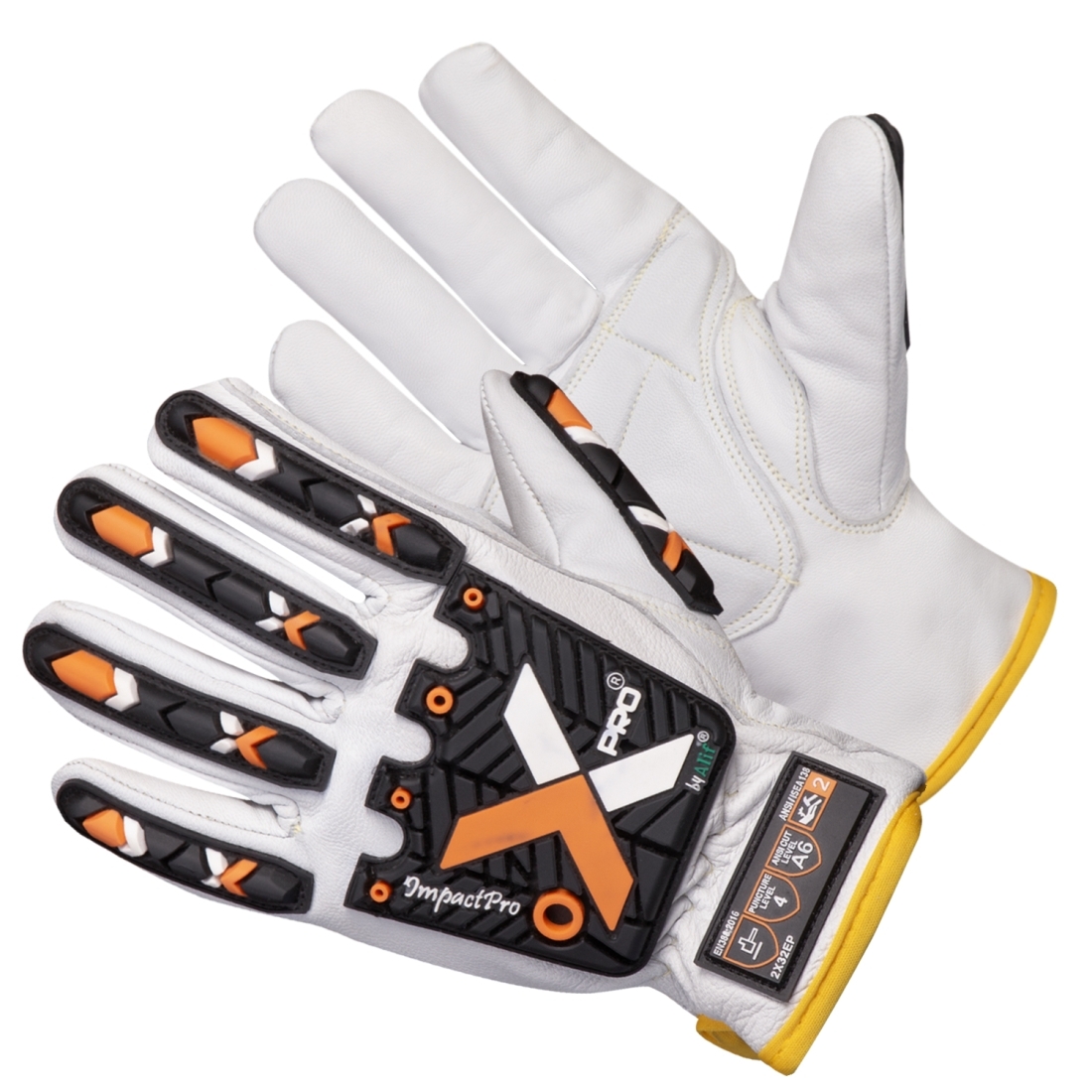
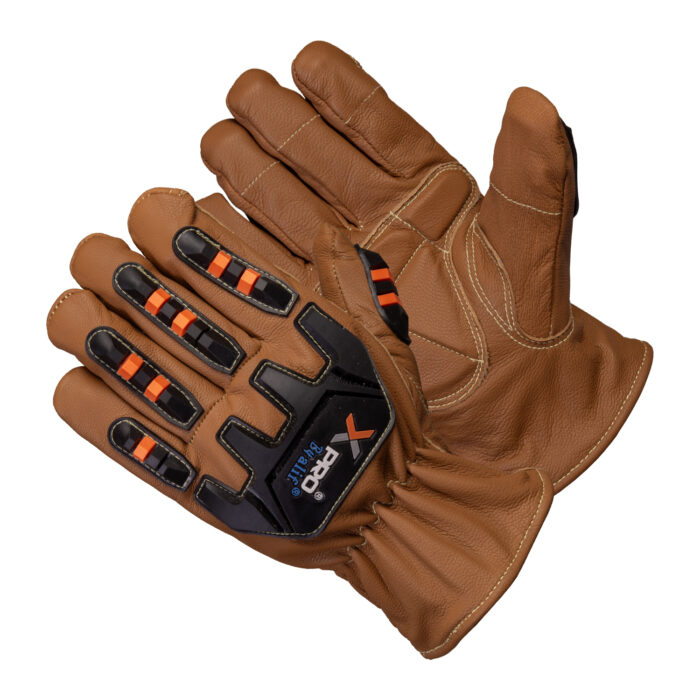
Heavy‑duty short cuff welding gloves with Kevlar Cut A6, Impact 2, gel padding, and Thinsulate for maximum safety and comfort.

EN 388 2016 Results: 3X33FP
Abrasion: 3
Cut (Coupe Test): X
Tear: 3
Puncture: 3
Cut (TDM-100 Test): F
Impact Protection: P
EN 388 is a European Standard. Cut Level is determined by the number of cycles it takes a spinning circular blade, that is pulled across the material under a constant weight of 500 grams, to cut the fabric. As the number of cycles increase, so does the glove’s ratings.

Protective Gloves Against Thermal Hazards: 41XX4X
Resistance to Flammability – 4
Contact Heat Resistance – 1
Convective Heat Resistance – X
Radiant Heat Resistance – X
Resistance to Small Splashes of Molten Metal – 4
Resistance to Large Splashes of Molten Metal – X
EN 407 is a general European standard designed to be used for any glove that is to be sold as providing protection against thermal hazards. All six tests are graded on a scale from 0 to 4, with 0 signifying that the glove failed the test, and 4 demonstrating it has achieved the maximum resistance in that specific area.

Abrasion Level: 5
Test Method: ASTM D3389-10
The ISEA 105-2016 standard outlines test methods for abrasion and is scored from 0-6. The ASTM D3389-10 is used for uncoated gloves, and the end point (failure) is the number of abrasion cycles when the first thread or yarn is broken. The larger numbers of cycles indicate greater abrasion resistance of the product and a higher Abrasion Level.

Cut Level: A6
New edition ISEA 105-2016 outlines a new test method for determining cut scores and a revised scale from A1-A9.

Puncture Level: 4
The ISEA 105-2016 blunt force puncture testing uses a probe to simulate a tear or burst hazard. The test measures the amount of force needed for a blunt probe to pierce through PPE material. Results are given in Newtons, which is converted into a 1-5 scale and spans from 10 newtons (Level 1) to 150+ newtons (Level 5) of puncture resistance.

Impact Level: 2
ISEA 138 is a new, voluntary standard for the North American market designed to accurately classify different levels of impact protection offered by the impact-resistant gloves on the market.

The EN ISO 21420:2020 standard outlines the general requirements and test methods for protective gloves. It covers aspects such as design, construction, comfort, efficiency, and safety, ensuring gloves meet necessary performance criteria. This standard applies to all protective gloves, including those used in industrial environments, and replaces the previous EN 420:2003 standard.

The CE mark (Conformité Européenne) indicates that a safety product meets the essential health, safety, and environmental protection requirements of the European Economic Area (EEA). It ensures that the product complies with relevant EU directives and can be sold freely within the EEA, providing assurance of its safety and quality.

Category II (Cat II) gloves are designed for intermediate risks, meaning they provide protection against mechanical, thermal, or chemical hazards but are not intended for extreme dangers. These gloves must be tested and type-approved by an EU-recognized institute and labeled with pictograms indicating their protective functions.
EN 388 2016 Results: 3X33FP
Abrasion: 3
Cut (Coupe Test): X
Tear: 3
Puncture: 3
Cut (TDM-100 Test): F
Impact Protection: P
EN 388 is a European Standard. Cut Level is determined by the number of cycles it takes a spinning circular blade, that is pulled across the material under a constant weight of 500 grams, to cut the fabric. As the number of cycles increase, so does the glove’s ratings.
Protective Gloves Against Thermal Hazards: 41XX4X
Resistance to Flammability – 4
Contact Heat Resistance – 1
Convective Heat Resistance – X
Radiant Heat Resistance – X
Resistance to Small Splashes of Molten Metal – 4
Resistance to Large Splashes of Molten Metal – X
EN 407 is a general European standard designed to be used for any glove that is to be sold as providing protection against thermal hazards. All six tests are graded on a scale from 0 to 4, with 0 signifying that the glove failed the test, and 4 demonstrating it has achieved the maximum resistance in that specific area.
Abrasion Level: 5
Test Method: ASTM D3389-10
The ISEA 105-2016 standard outlines test methods for abrasion and is scored from 0-6. The ASTM D3389-10 is used for uncoated gloves, and the end point (failure) is the number of abrasion cycles when the first thread or yarn is broken. The larger numbers of cycles indicate greater abrasion resistance of the product and a higher Abrasion Level.
Cut Level: A6
New edition ISEA 105-2016 outlines a new test method for determining cut scores and a revised scale from A1-A9.
Puncture Level: 4
The ISEA 105-2016 blunt force puncture testing uses a probe to simulate a tear or burst hazard. The test measures the amount of force needed for a blunt probe to pierce through PPE material. Results are given in Newtons, which is converted into a 1-5 scale and spans from 10 newtons (Level 1) to 150+ newtons (Level 5) of puncture resistance.
Impact Level: 2
ISEA 138 is a new, voluntary standard for the North American market designed to accurately classify different levels of impact protection offered by the impact-resistant gloves on the market.
The EN ISO 21420:2020 standard outlines the general requirements and test methods for protective gloves. It covers aspects such as design, construction, comfort, efficiency, and safety, ensuring gloves meet necessary performance criteria. This standard applies to all protective gloves, including those used in industrial environments, and replaces the previous EN 420:2003 standard.
The CE mark (Conformité Européenne) indicates that a safety product meets the essential health, safety, and environmental protection requirements of the European Economic Area (EEA). It ensures that the product complies with relevant EU directives and can be sold freely within the EEA, providing assurance of its safety and quality.
Category II (Cat II) gloves are designed for intermediate risks, meaning they provide protection against mechanical, thermal, or chemical hazards but are not intended for extreme dangers. These gloves must be tested and type-approved by an EU-recognized institute and labeled with pictograms indicating their protective functions.
Application: Welding, fabrication, industrial maintenance, mechanical handling
Trade: Welders, fabricators, construction workers, heavy machinery operators
Hazard: Cuts, impact, vibration, heat, sparks, abrasions, mechanical risks
Industry: Manufacturing, automotive, construction, shipbuilding, engineering
+92 302 824 4147
+1 571 321 7211
Plot 416, 431 Sector 7/a Korangi Industrial Area, Karachi, Sindh 74900
All content, including text, graphics, logos, and designs, is the exclusive property of XPRO®. It is protected under patent, copyright, and trademark laws. Unauthorized use, reproduction, or distribution is strictly prohibited. All rights reserved.